The Keats Cycle
The Keats Cycle, Haralabos [Harry] Stafylakis (2007)
for baritone or bass-baritone and piano
on poetry by John Keats (1795-1821)
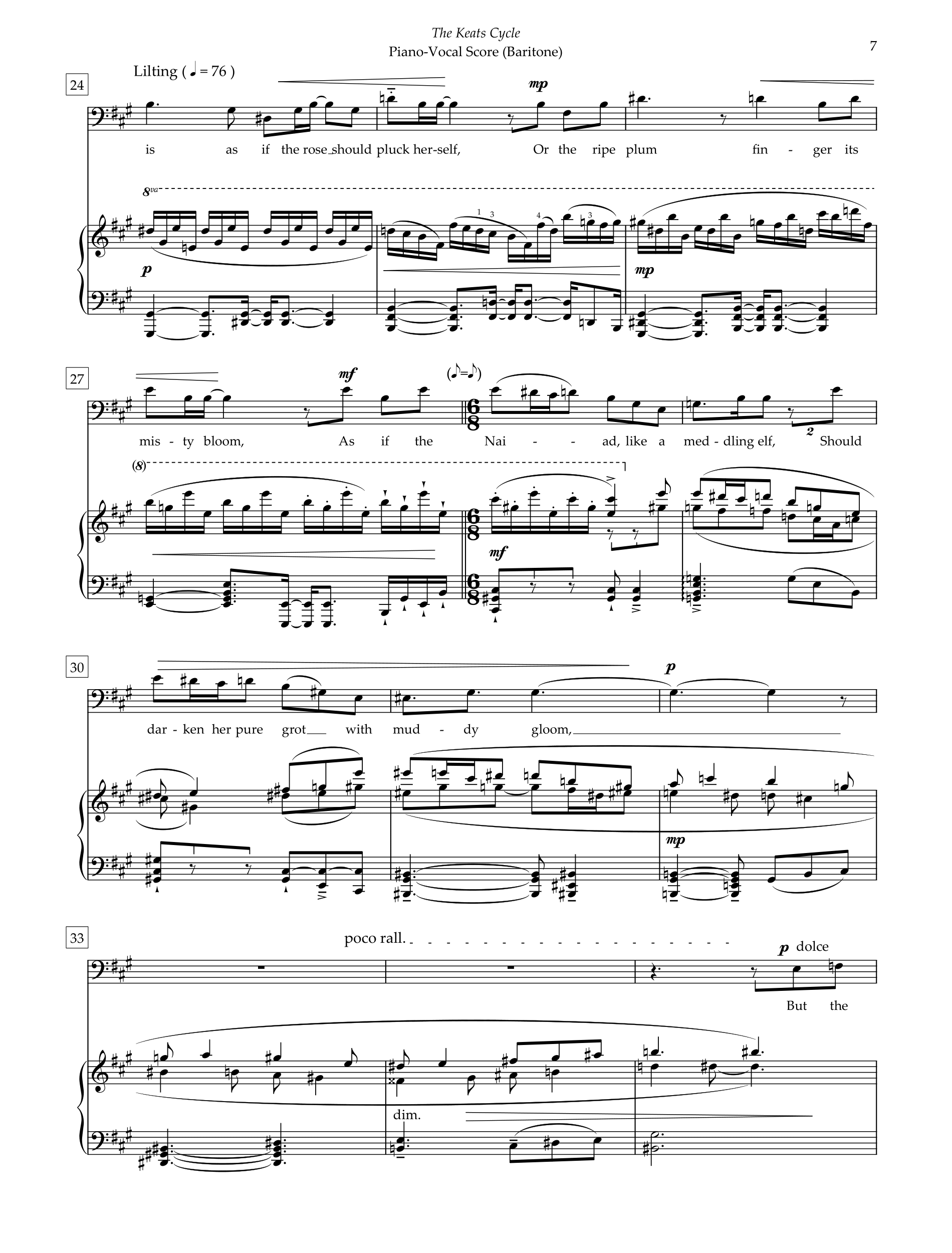
Composed in the summer and fall of 2007, The Keats Cycle represents an attempt to express the pure and introspective poetry of John Keats (1795-1821) through a musical discourse that would somehow be appropriate to both Keats’s 19th-century world and the composer’s 21st-century one. The cycle unites five posthumous poems by Keats, as well as the poet’s epitaph, in an order that creates a sense of philosophical unity and direction. The dramatic-musical interpretation of the texts traces a conceptual line from youthful idealism, through to self-doubt, self-realization, death, and finally to apotheosis.
Movements:
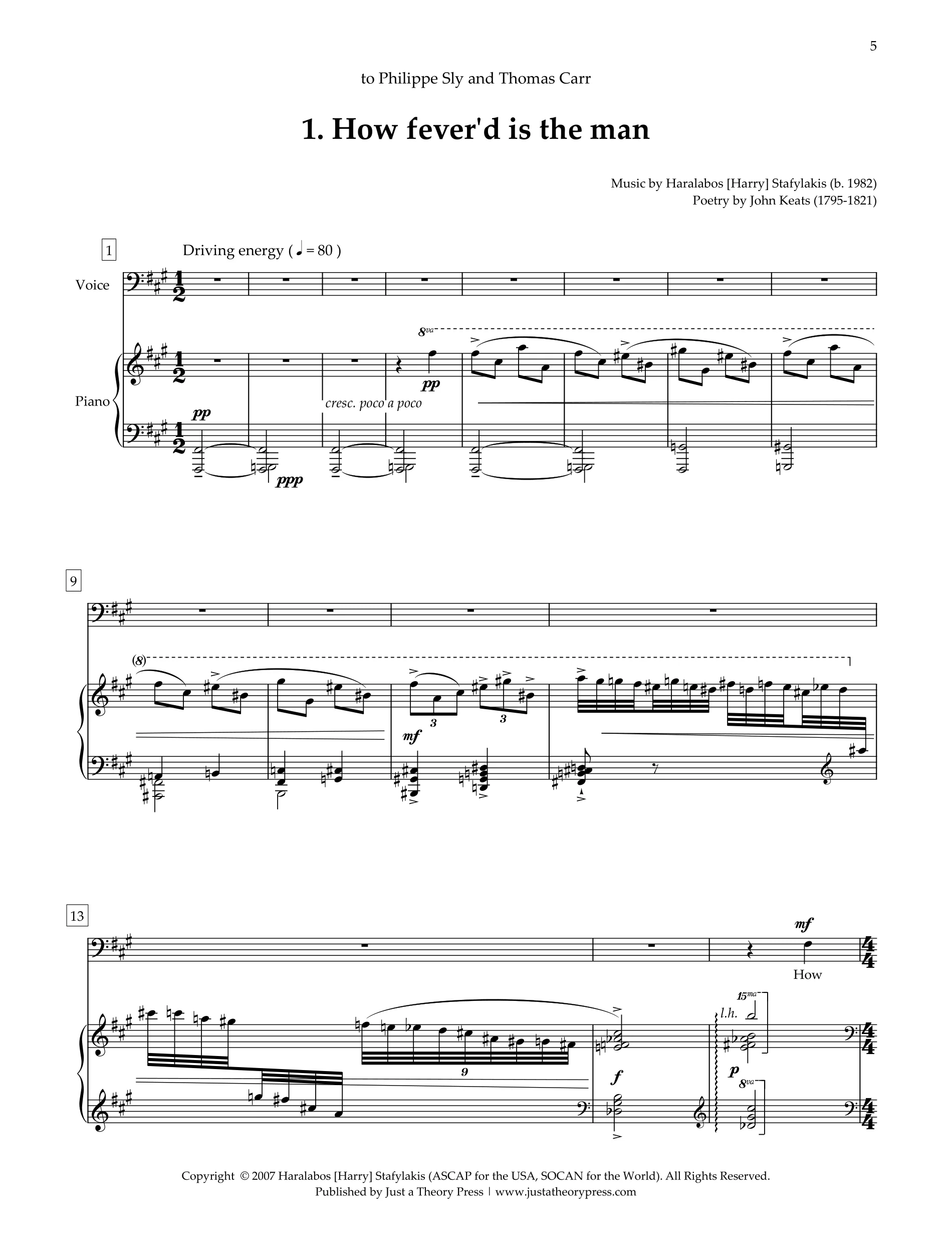
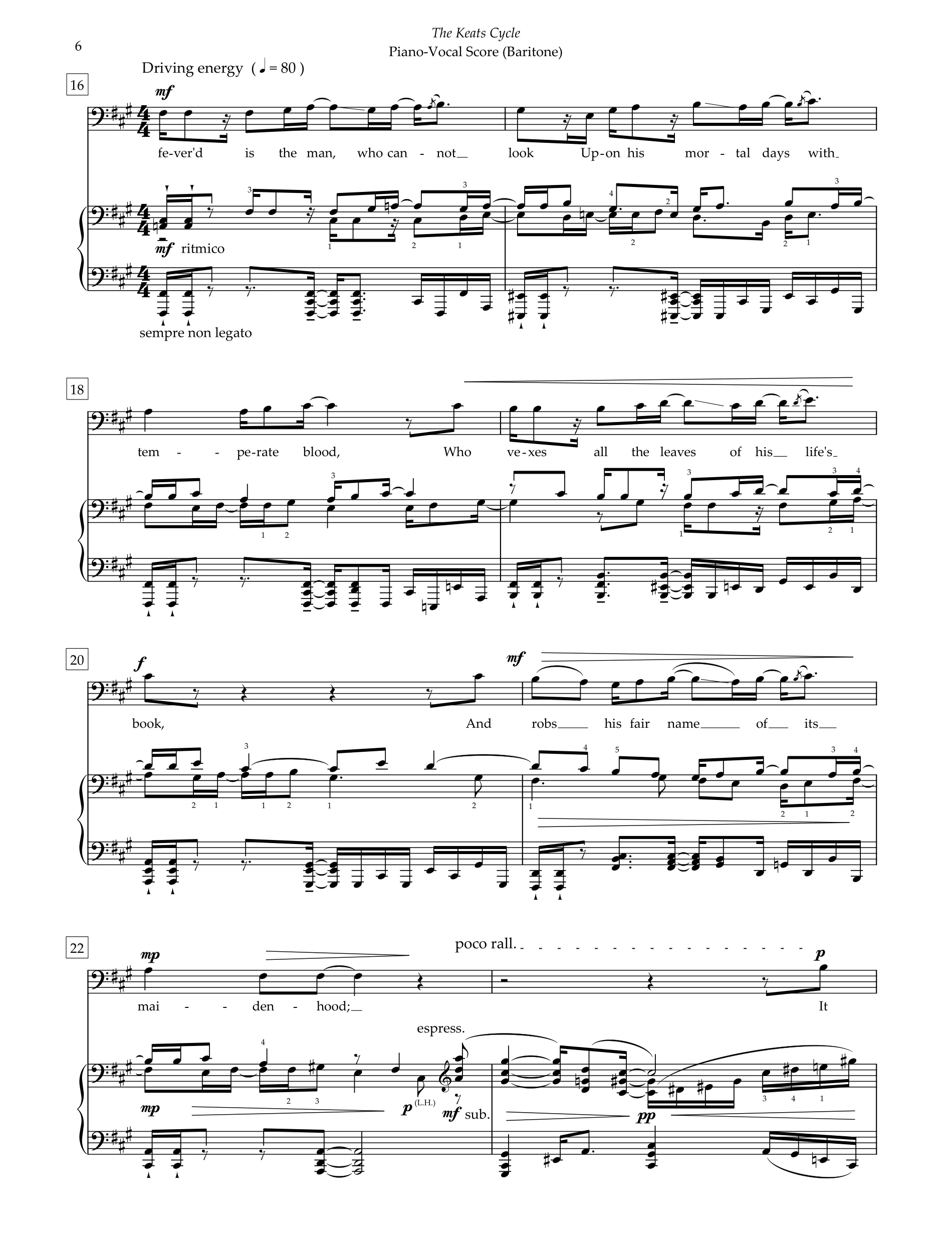
1. How fever’d is the man
2. The day is gone
3. Why did I laugh to-night?
4. Vocalise: Here lies one whose name was writ in water
5. This living hand
6. Bright star
More Images
The Keats Cycle
The Keats Cycle, Haralabos [Harry] Stafylakis (2007)
for baritone or bass-baritone and piano
on poetry by John Keats (1795-1821)
Composed in the summer and fall of 2007, The Keats Cycle represents an attempt to express the pure and introspective poetry of John Keats (1795-1821) through a musical discourse that would somehow be appropriate to both Keats’s 19th-century world and the composer’s 21st-century one. The cycle unites five posthumous poems by Keats, as well as the poet’s epitaph, in an order that creates a sense of philosophical unity and direction. The dramatic-musical interpretation of the texts traces a conceptual line from youthful idealism, through to self-doubt, self-realization, death, and finally to apotheosis.
Movements:
1. How fever’d is the man
2. The day is gone
3. Why did I laugh to-night?
4. Vocalise: Here lies one whose name was writ in water
5. This living hand
6. Bright star
Product Information
Product Information
Shipping & Returns
Shipping & Returns
Description
The Keats Cycle, Haralabos [Harry] Stafylakis (2007)
for baritone or bass-baritone and piano
on poetry by John Keats (1795-1821)
Composed in the summer and fall of 2007, The Keats Cycle represents an attempt to express the pure and introspective poetry of John Keats (1795-1821) through a musical discourse that would somehow be appropriate to both Keats’s 19th-century world and the composer’s 21st-century one. The cycle unites five posthumous poems by Keats, as well as the poet’s epitaph, in an order that creates a sense of philosophical unity and direction. The dramatic-musical interpretation of the texts traces a conceptual line from youthful idealism, through to self-doubt, self-realization, death, and finally to apotheosis.
Movements:
1. How fever’d is the man
2. The day is gone
3. Why did I laugh to-night?
4. Vocalise: Here lies one whose name was writ in water
5. This living hand
6. Bright star